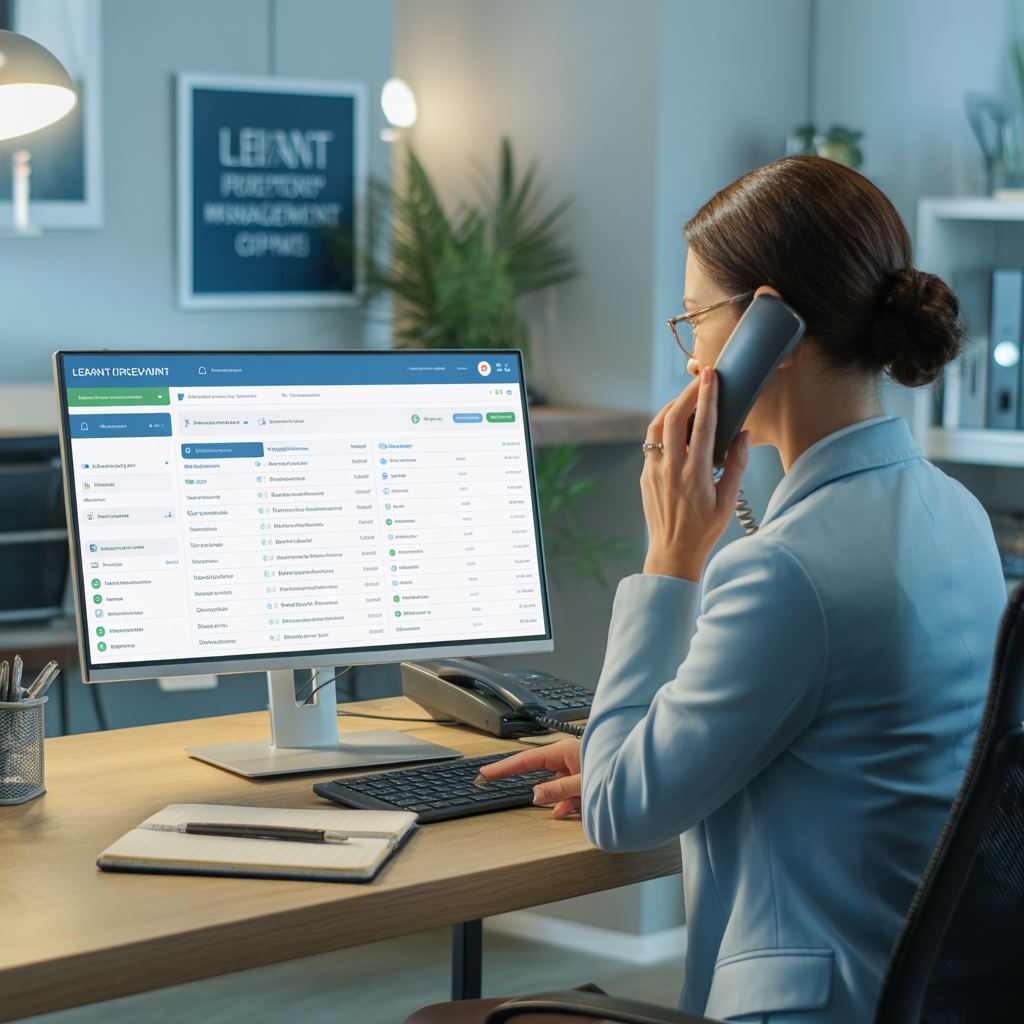
Property Managers Miss Leasing Opportunities When Calls Go Unanswered
If you manage a portfolio of rental properties, you already know how quickly communication builds up during the day.
Prospective tenants call about available units. Current tenants request maintenance. Vendors confirm repairs. Property owners ask for updates.
Meanwhile property managers must coordinate schedules, leases, and maintenance requests.
Because of that workload, answering every call becomes difficult.
Now imagine a realistic situation.
A property management company handling 150 rental units might receive 20 to 30 leasing inquiries each week.
If six calls go unanswered, several renters will contact another property immediately.
At an average rent of $1,400 per month, losing just two tenants equals over $33,000 in annual rental income.
Many property managers now prevent this problem by installing AI receptionists that answer calls instantly. If you want to see how the system works, you can download the AI receptionist setup guide for property management companies.
Renters Often Call Multiple Properties
Most renters do not contact only one property manager.
Instead, they search online, review listings, and begin calling several properties.
The first property that answers usually schedules the tour.
Imagine a renter searching for an apartment before moving to a new city.
One property answers immediately and schedules a viewing.
Another property sends the call to voicemail.
A third property returns the call hours later.
In most cases, the renter schedules with the property that responded first.
AI receptionists eliminate that delay.
The system answers calls instantly, gathers renter information, and schedules property tours automatically.
If you want to see how automation helps property managers capture more leasing inquiries, you can see how AI receptionists handle leasing calls automatically.
Administrative Overload Creates Communication Gaps
The real challenge often is not a lack of demand.
Instead, operational overload creates communication gaps.
Property managers must coordinate maintenance requests, schedule vendors, process lease documents, and respond to tenant communication.
Meanwhile new leasing inquiries continue arriving.
Because of that workload, phone coverage becomes inconsistent.
Some property management companies attempt to solve this problem by hiring reception staff.
However, payroll costs increase quickly.
A full time receptionist often costs $40,000 to $55,000 annually after payroll taxes and benefits.
Training also requires time, and employee turnover introduces additional disruption.
Operational Stability Improves Leasing Communication
AI receptionists create operational stability inside property management companies.
Calls receive answers immediately. Renters speak with a human sounding voice assistant. Leasing inquiries remain organized automatically.
Follow ups stay consistent because the system tracks conversations.
Most importantly, the technology runs continuously.
There are no onboarding delays. No retraining cycles. No downtime caused by sick days or employee turnover.
Because of that reliability, property managers maintain consistent communication with renters.
Missed Calls Quietly Reduce Occupancy
Many property managers underestimate how expensive missed calls become.
However, the numbers often reveal the real impact.
Imagine a property management company receiving 30 leasing inquiries monthly.
If eight prospects never reach someone, several will sign leases elsewhere.
At an average rent of $1,350 monthly, losing two tenants equals over $32,000 in annual rental income.
AI receptionists prevent these missed opportunities.
The system answers calls instantly, schedules property tours, and captures renter information automatically.
Meanwhile property managers focus on managing properties instead of phone coverage.
Automation Helps Property Managers Scale
Administrative bottlenecks often limit portfolio growth.
However, AI receptionists remove that limitation.
Calls receive answers immediately. Leasing inquiries stay organized. Tenant communication remains structured.
Because of that efficiency, property managers handle more units without increasing administrative staff.
Instead of missing leasing opportunities, companies capture more renters.
Owners regain time to focus on improving properties and expanding portfolios.
If Your Property Management Company Misses Leasing Calls
Many property managers lose tenants simply because renters cannot reach someone quickly.
That problem becomes more expensive as portfolios grow.
However, installing an AI receptionist immediately improves response speed.
The system answers calls, schedules property tours, and organizes renter communication automatically.
Because of that reliability, property managers capture more leasing opportunities.
If you want to see how automation can help your property management company capture more tenants, you can see how AI receptionists work for property managers, explore real examples through see how service companies grow using AI systems, or contact True Elevation AI to implement an AI receptionist.