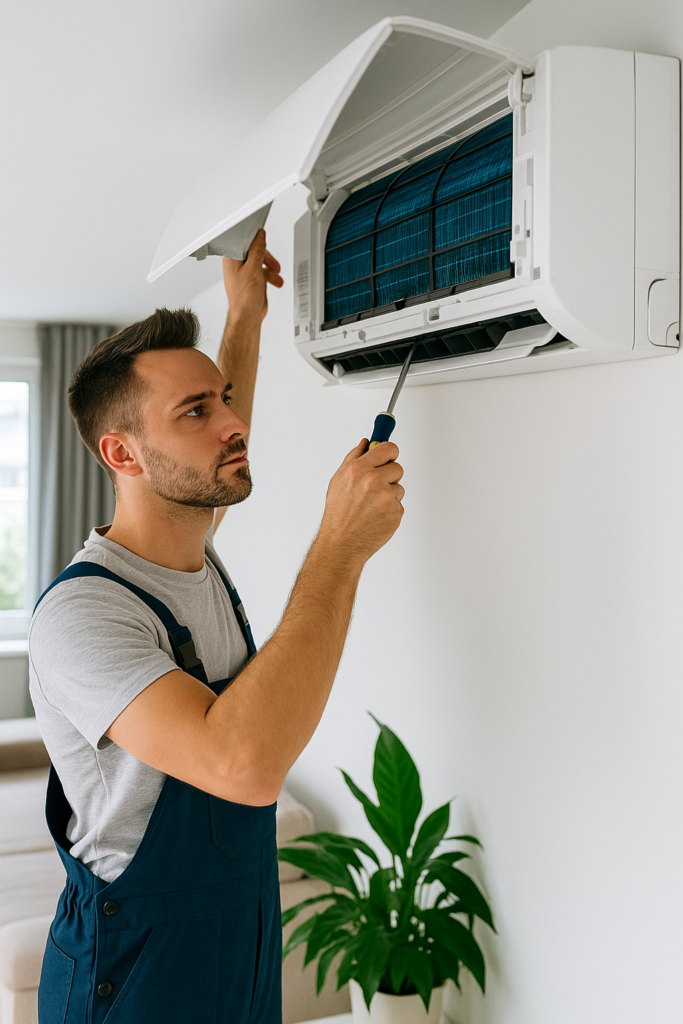
Emergency AC Breakdowns Create Urgent Phone Calls
HVAC companies often notice the same pattern during hot weather.
A homeowner’s air conditioner suddenly stops working. Another homeowner hears a loud noise coming from the outdoor unit. Meanwhile, technicians are already out on service calls and the office team is scheduling appointments for the next day.
Because the team is busy, incoming calls sometimes go to voicemail.
Homeowners dealing with a broken air conditioner rarely wait long. Instead, they call another HVAC company that answers immediately.
If you are researching an AI receptionist, you likely recognize this opportunity. Emergency AC repair calls often turn into high-value service jobs because customers need fast help.
Instead of letting those calls disappear, many HVAC contractors now install automated reception systems that answer calls instantly. If you want to see how this works in practice, you can see how this captures emergency AC repair calls and converts them into scheduled service visits automatically.
Hiring Additional Dispatch Staff Increases Payroll
Some HVAC companies attempt to solve missed calls by hiring more office staff.
However, payroll expenses increase immediately. Training new dispatchers also requires time, and turnover forces the company to repeat the hiring process again.
Emergency repair calls also arrive unpredictably. Some homeowners call early in the morning when they discover the system stopped overnight. Others call late in the evening after returning home from work.
Because of that unpredictability, staffing alone rarely guarantees reliable phone coverage.
An AI receptionist solves this problem differently.
First, the system answers every incoming call instantly. Next, it can manage several conversations at the same time. The system also continues working after normal business hours.
There are no onboarding delays and no retraining cycles. HVAC companies also avoid disruptions caused by sick days, vacation schedules, or employee turnover.
That reliability provides stable communication coverage for growing contractors.
A Simple Example Of Missed Repair Revenue
Consider an HVAC company that misses five emergency AC repair calls each week.
That equals roughly 20 missed calls every month.
Emergency repair visits often range between $350 and $600 depending on the issue and parts required.
If even half of those missed calls would have turned into booked jobs, the company could be losing $3,500 to $6,000 in monthly revenue.
Over the course of a year, that could exceed $50,000 in missed repair opportunities.
Capturing even a portion of those calls significantly improves service revenue.
If you want to see how HVAC companies convert those missed calls into booked service visits, you can see how this system turns emergency repair inquiries into scheduled HVAC jobs.
Homeowners Expect Immediate Phone Responses
Homeowners dealing with AC problems usually contact several companies.
If the phone rings repeatedly or goes directly to voicemail, they quickly move on to another contractor.
With AI answering calls instantly, homeowners hear a professional voice right away. The system gathers basic information about the system problem and helps guide the customer toward scheduling service.
As a result, more incoming calls turn into real repair appointments.
That improvement alone can increase weekly service bookings significantly.
Operational Stability For Growing HVAC Businesses
Human sounding conversations maintain professional customer communication. Extended hours coverage allows HVAC companies to capture after-hours repair calls. Rapid deployment eliminates onboarding delays. Consistent workflows remove retraining cycles. Continuous availability also prevents downtime caused by sick days or employee turnover.
These advantages create a stable communication system for HVAC contractors handling increasing call volume.
Technicians remain focused on completing repairs while the system ensures every call receives a response.
If Your HVAC Company Is Missing Emergency Calls
HVAC businesses focused on growth benefit from answering every incoming call. Emergency AC problems create urgent demand, and the company that answers first usually wins the job.
When calls go unanswered, competing contractors capture those repair opportunities.
Instead of expanding payroll exposure, many HVAC companies install AI receptionists to stabilize communication and capture more service bookings.
If you want to improve how your HVAC company handles incoming repair calls, you can see how this increases HVAC service bookings automatically, review proof through see how service businesses build reliable communication systems designed for growth, or start implementing an AI receptionist workflow for your HVAC company today.