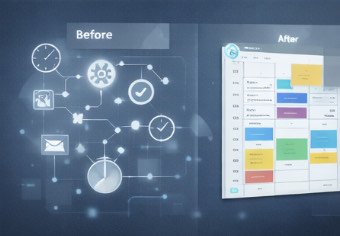
Administrative Work Slows Auto Shop Revenue
Many auto repair shop owners eventually face the same operational challenge.
Service appointments increase. Customer follow-ups require attention. Parts coordination and scheduling adjustments happen all day. Meanwhile, technicians should focus on repairs rather than paperwork.
Because of that workload, administrative tasks begin slowing the entire operation.
If you are researching an AI executive assistant, you likely already recognize the pattern. Administrative coordination absorbs hours that could otherwise support service revenue.
Instead of hiring another service advisor or office administrator, many repair shops install AI executive assistants to manage operational workflows automatically. If you want to understand how this works inside auto service businesses today, you can see how this automates scheduling and administrative workflows for repair shops.
Hiring More Staff Creates Ongoing Overhead
Hiring an additional office employee might appear to solve the issue.
However, payroll increases immediately. In addition, onboarding requires training and management time. Eventually, turnover forces the hiring process to begin again.
Administrative workloads also change constantly. Some days involve heavy service scheduling. Other days include customer follow-ups and repair coordination. Because of that variability, staffing alone rarely stabilizes operations.
An AI executive assistant approaches the challenge differently.
First, the system organizes scheduling automatically. Next, it manages follow-ups and administrative communication. In addition, it keeps operational data structured for the team. Meanwhile, no onboarding delays slow implementation. Likewise, retraining cycles never interrupt productivity. Most importantly, no sick days or turnover risk disrupt daily workflow.
Because of that reliability, operational stability improves immediately.
A full time administrative employee often costs several thousand dollars each month once payroll taxes and benefits are included. In comparison, AI executive assistant systems usually operate within flexible pricing ranges tied to automation workload. As a result, reclaiming even a few hours of administrative capacity each week can offset the investment.
Operational Efficiency Improves Across The Shop
Administrative automation creates immediate operational improvements.
Service scheduling becomes more organized. Customer follow-ups happen consistently. Repair coordination becomes easier to manage.
Consequently, shop teams spend less time handling paperwork and more time completing revenue-generating repairs.
If you want to see how automation improves auto shop operations, you can see how this streamlines administrative workflows for repair businesses.
ROI: Payroll Costs Versus Operational Efficiency
Auto shop owners usually compare two options.
One option involves hiring additional administrative staff. That approach increases payroll costs and management complexity.
The other option involves installing AI executive assistant infrastructure. That approach improves efficiency without expanding payroll overhead.
Even modest improvements in administrative productivity can create meaningful financial results. For example, freeing several hours each week allows the team to handle more service appointments.
Human sounding communication maintains professional interaction with customers. At the same time, extended hours coverage ensures administrative tasks continue beyond office hours. Meanwhile, no onboarding delays allow rapid implementation. Additionally, retraining cycles never interrupt workflows. Finally, the system operates continuously without downtime caused by illness or employee turnover.
Because of those advantages, operational reliability improves significantly.
What Repair Teams Experience After Automation
Repair teams want predictable operational systems.
First, they want organized service scheduling. Next, they want consistent customer follow-ups. Finally, they want fewer administrative interruptions during the workday.
Instead of manually managing every task, teams rely on automated workflows. Consequently, productivity improves across the shop.
Operational Stability For Growing Auto Repair Businesses
Human sounding communication maintains professional interaction. In addition, extended hours coverage protects operational continuity. Furthermore, rapid deployment eliminates onboarding delays. Likewise, consistent automation removes retraining cycles. Finally, continuous availability eliminates disruptions caused by sick days or employee turnover.
Because of that stability, auto repair businesses maintain reliable operational systems.
If Administrative Work Is Slowing Your Auto Shop
Auto repair businesses focused on growth benefit from removing operational bottlenecks. When administrative work overwhelms the office, service capacity becomes limited.
Instead of expanding payroll exposure, many repair shops install AI executive assistants because they stabilize operations and free up staff capacity. If you want to reduce administrative workload and improve operational efficiency, you can see how this improves repair shop productivity automatically, review implementation outcomes through see how service businesses build efficient operational systems, or start building your AI executive assistant workflow for your repair shop today.