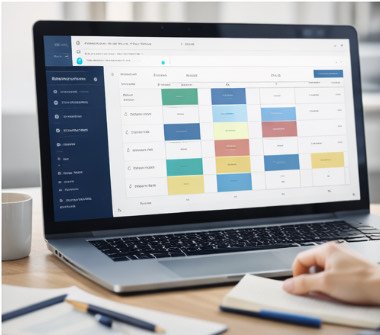
Lease Admin Work Slows Portfolio Expansion
Right now, lease paperwork moves constantly.
New leases require documentation. Renewals need updates. Amendments demand signatures. Meanwhile, your team manages showings, maintenance, and tenant communication. Therefore, backend admin quietly expands.
In property management, admin drag limits growth.
If you are researching an AI executive assistant, you likely feel that tension. Because lease administration consumes operational bandwidth, portfolio expansion becomes harder. Consequently, this decision centers on protecting scalability.
Instead of hiring another administrative coordinator, many operators install infrastructure that automates lease workflows. If you want to evaluate how that fits into your company today, you can see how this automates lease administration without increasing payroll overhead.
Why Hiring Does Not Solve Scaling Bottlenecks
At first, hiring feels like structure.
However, payroll increases immediately. In addition, onboarding requires process training. Then, turnover recreates knowledge gaps.
Lease volume fluctuates seasonally. Renewal cycles cluster together. Move-ins and move-outs overlap. Because of that variability, manual systems often strain under pressure.
By contrast, an AI executive assistant structures lease workflows consistently. Not only does it track document status, but it flags missing signatures instantly. Furthermore, no onboarding delays slow deployment. Likewise, retraining cycles never interrupt execution. Most importantly, no sick days or turnover risk disrupt continuity. Therefore, operational stability improves immediately.
A full time lease administrator often costs several thousand dollars per month once payroll taxes and benefits are included. In comparison, AI systems operate within scalable usage ranges. As a result, adding just a few additional managed units per month can offset much of that cost.
Structured Admin Increases Growth Capacity
Typically, portfolio growth depends on operational clarity.
Therefore, reducing backend friction increases acquisition ability.
With AI handling document tracking and reminders, lease cycles move faster. Then, renewals process smoothly. Consequently, leadership time reopens for expansion.
If you are weighing hiring versus automation, you can see how this stabilizes property management operations today.
ROI: Payroll Overhead Versus Infrastructure Investment
At the decision stage, property managers compare two paths. On one hand, fixed payroll increases monthly overhead. On the other hand, infrastructure protects scalability without long-term staffing commitment.
Small efficiency improvements compound quickly. As lease processing improves, turnaround time shortens. Then, higher processing capacity strengthens revenue growth. Because pricing scales with workflow usage, most firms evaluate ROI rather than fixed packages.
Additionally, human sounding communication maintains professionalism with tenants and owners. At the same time, extended coverage keeps admin moving outside standard hours. Meanwhile, no onboarding delays allow rapid activation. Similarly, retraining cycles never create inconsistency. Finally, no downtime from sick days protects operational continuity.
Hiring alone cannot guarantee that reliability.
What Changes When Lease Workflows Become Automated
Instead of manually tracking paperwork, systems monitor status automatically.
Instead of chasing signatures, reminders trigger instantly. Consequently, delays decrease.
As friction decreases, portfolio growth becomes realistic instead of overwhelming.
Implementation Integrates With Existing Systems
Importantly, automation does not replace your property management software.
Rather, the AI executive assistant connects with your existing tools. Because workflows mirror your current processes, transition feels smooth. In addition, execution speed improves immediately.
Most property managers implement executive automation once portfolio complexity increases. As unit count grows, the system scales automatically. Therefore, repeated hiring cycles become unnecessary.
Operational Stability Advantages Managers Notice Immediately
Human sounding communication maintains professional tone. In addition, extended coverage protects workflow timelines. Furthermore, rapid deployment eliminates onboarding delays. Likewise, consistent processes remove retraining cycles. Finally, continuous performance eliminates disruption from sick days or turnover.
Because of that stability, growth becomes manageable.
If Lease Admin Is Slowing Expansion, This Is The Move
Property management firms scaling beyond small portfolios benefit most from AI executive assistants. When leadership time stays buried in paperwork, growth slows. Consequently, acquisition opportunities get delayed.
Instead of increasing payroll exposure, many operators install AI because it protects time and stabilizes backend systems. If you are ready to remove lease admin friction and scale efficiently, you can see how this strengthens your property management infrastructure today, review proof through see how service businesses are building stable AI systems designed for growth, or start building your AI executive assistant workflow for your company now.