If Repair Calls Hit Voicemail, Revenue Slips Fast
Right now, drivers are calling your shop. Some need diagnostics. Others need urgent repairs. Meanwhile, your techs stay buried in active jobs. The phone rings. No one answers. The driver calls the next shop.
That pattern repeats daily in auto repair.
If you are researching an AI receptionist, you already feel this pressure. You know missed calls equal missed tickets. Therefore, the decision is not about curiosity. The decision is about revenue protection.
Instead of hiring another front desk employee, many shop owners install infrastructure that answers every call instantly. If you want to see how that works inside your shop, you can see how this books more repair calls without adding payroll pressure
Hiring More Staff Does Not Fix Volume Spikes
At first, adding a receptionist feels safe. However, payroll expands quickly. Training requires time. Eventually, turnover resets the cycle.
Auto repair demand shifts constantly. One week stays slow. The next week fills every bay. Because of that, staffing rarely aligns perfectly with inbound calls.
A human sounding AI receptionist removes that mismatch. Coverage extends beyond standard hours. Evening calls still get answered. No onboarding delays slow you down. No retraining cycles create inconsistency. Sick days never interrupt intake. Turnover risk disappears entirely.
A full time employee can cost several thousand monthly once payroll taxes and benefits are included. In contrast, AI receptionist systems operate within scalable ranges tied to usage. A few additional approved repairs per week can offset the system cost.
Response Speed Directly Impacts Approved Repairs
Drivers call multiple shops. The first shop that answers often earns the job.
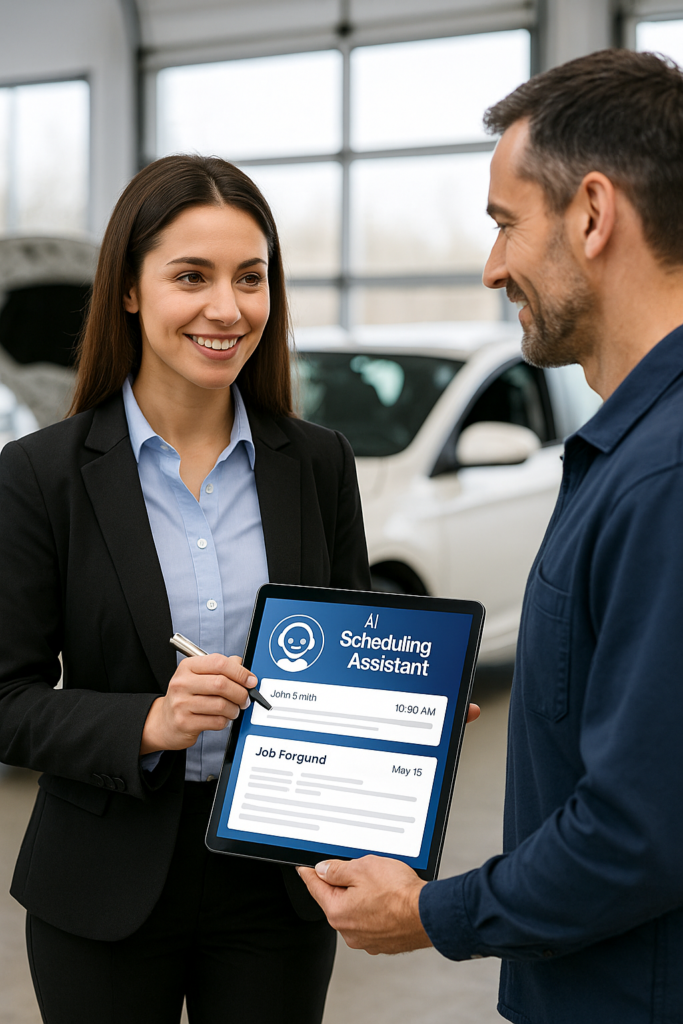
With AI handling intake, callers hear a professional voice immediately. The system gathers vehicle details. It confirms availability. It schedules the appointment. As a result, your advisors start the day with confirmed tickets instead of voicemails.
If you are comparing hiring versus automation, you can see how this stabilizes auto shop communication while increasing booked jobs
ROI Framing: Payroll Risk Versus Revenue Stability
Decision stage shop owners compare two paths. One path increases fixed payroll cost. The other increases operational stability.
Small improvements in response time often raise booking rates. More bookings create more estimates. More estimates create more approvals. Because pricing scales with call volume, most shops evaluate ROI instead of fixed packages.
Human sounding conversations build trust quickly. Longer hours coverage captures late inquiries. No onboarding delays allow fast deployment. No retraining cycles maintain consistency. No downtime from sick days protects your schedule.
Hiring alone cannot guarantee that level of reliability.
What Drivers Experience When Calls Get Answered Instantly
Immediate response builds confidence. The conversation feels organized. The repair gets scheduled quickly. Expectations remain clear.
After hours calls no longer sit in voicemail. Instead, your next morning begins structured and predictable. That structure reduces stress across your service desk.
Implementation Works With Your Existing Shop Workflow
Automation does not require complex changes. The AI receptionist mirrors your intake process. Calls route correctly. Calendars stay familiar. Questions follow your existing script.
Most auto shops install automation after growth exposes communication bottlenecks. Rather than hiring again during every busy season, the system scales automatically.
Operational Stability Advantages Shop Owners Notice First
Human sounding conversations keep drivers comfortable. Longer hours coverage protects evening calls. No onboarding delays speed implementation. Retraining cycles disappear because workflows remain consistent. There is no downtime from sick days or turnover risk.
That stability becomes revenue protection.
If Missed Calls Cost You Jobs, This Is The Logical Move
Auto shops with steady inbound demand benefit most from AI receptionists. When your team cannot answer every call, drivers move on. Consequently, revenue drops.
Instead of expanding payroll risk, many owners install AI because it protects service tickets and stabilizes intake. If you are ready to protect repair volume and capture every inbound call, you can see how this books more auto repair appointments right now review proof through see how service businesses are building stable communication systems designed for growth, or start building your AI receptionist workflow for your auto repair shop today