Who This Is For
This guide is for auto repair owners already thinking about automation. Many readers run ads, manage walk-ins, and still miss calls during busy hours. Because customers often contact multiple shops, fast response matters.
Some shop owners believe missed calls only happen occasionally. However, even one missed call each day can mean lost brake jobs, inspections, or diagnostics. Therefore, improving intake becomes a direct growth move instead of a tech experiment.
If you want to see how structured intake works inside a real service workflow, you can see how AI receptionists help auto businesses respond faster and keep service calendars active
Why Speed Matters in the Auto Industry
Drivers usually call when a problem feels urgent. When a vehicle will not start or makes a strange noise, the caller wants answers immediately. Because of that urgency, response time shapes buying decisions.
Meanwhile, front-desk staff handle invoices, parts orders, and customer questions at the same time. As a result, calls often go to voicemail during peak hours. That small delay pushes customers toward competitors who answer instantly.
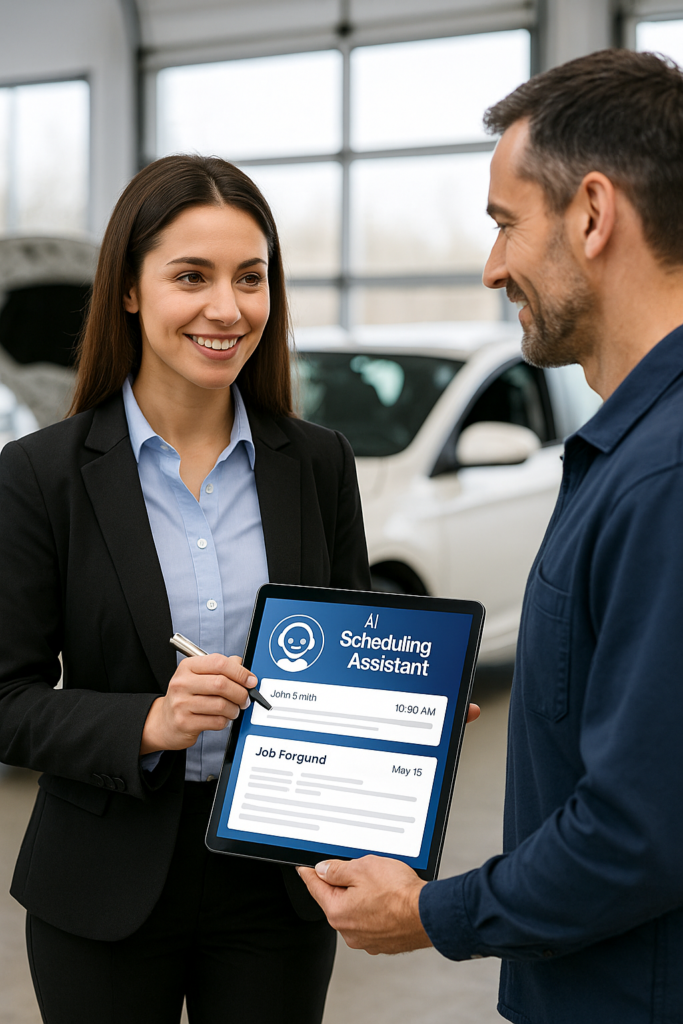
An AI receptionist removes that friction. First, the caller hears a natural voice. Next, the system gathers details about the vehicle and issue. Then, appointment options appear without long wait times.
Realistic Pricing Ranges With ROI Framing
Most auto shops invest between $400 and $900 per month for AI receptionist coverage. Larger locations with high call volume may spend $1,000 to $1,600 monthly depending on usage.
Hiring another service advisor often costs $3,000 to $5,000 per month after payroll and training expenses. Because automation handles repetitive intake, many owners view the system as a way to increase booked jobs rather than replace staff.
One additional transmission repair or engine diagnostic can offset several months of service costs. Therefore, ROI comes from improved conversion rates instead of simple cost reduction.
Operational Stability Advantages
Consistency builds trust with customers. The AI receptionist sounds human and keeps conversations simple. Each call follows a clear structure, which prevents missed details about vehicle issues.
Coverage also extends beyond normal hours. Evening callers still reach a helpful voice instead of voicemail. Early morning inquiries move toward scheduling immediately.
Another advantage involves reliability. Automation does not need onboarding time. There are no sick days, no retraining cycles, and no sudden coverage gaps. Because intake stays steady, shop owners gain predictable communication flow.
If you want to understand how consistent intake improves long-term growth, you can review real-world outcomes from service businesses using AI communication systems
AI Receptionist vs Hiring Another Service Advisor
Adding staff can help during busy seasons. Still, payroll risk remains high when demand slows. Training also takes time, and turnover can interrupt operations.
An AI receptionist answers every call immediately. Meanwhile, your team focuses on inspections, repairs, and upsells. Because automation handles routine intake, service advisors spend more time closing high-value work.
Some shops use a hybrid model. The AI manages first contact. Human staff handle complex estimates later. As a result, customer experience stays strong without overwhelming the team.
What Happens When Shops Delay Implementation
Many owners wait because they assume automation feels complicated. However, missed calls quietly reduce marketing ROI each week.
While competitors answer faster, your advertising spend stays the same. Consequently, slower intake lowers overall profitability. Taking action earlier usually improves performance before busy seasons arrive.
If you want to explore how faster response turns more inquiries into scheduled diagnostics, you can learn how an AI receptionist helps auto shops stay available longer hours and capture more repair opportunities
Example Workflow in a Real Auto Shop
Imagine a driver calls about brake noise during lunch hours. Because the AI receptionist answers immediately, the caller schedules an inspection without waiting.
Next, the system logs the issue and sends a summary to your team. Meanwhile, technicians continue working without interruptions. Over time, call data reveals patterns about common problems and peak booking times.
Therefore, marketing decisions become clearer because you understand when customers contact you most often.
Implementation Without Disruption
Setup begins by mapping common auto repair questions. Then, voice tone adjusts to match your brand and customer style. After that, integrations connect scheduling tools and intake forms.
Your current workflow continues while automation runs quietly in the background. Because deployment stays simple, operations never slow down during the transition.
Is an AI Receptionist Worth It for Auto Shops Right Now
Many owners decide after comparing missed calls with lost repair revenue. Faster responses create stronger first impressions. Structured intake reduces stress on front-desk staff.
Instead of chasing every call manually, your shop runs with consistent communication. Because customers receive quick answers, service calendars stay full.
If you want to stop losing repair jobs because calls go unanswered, take the next step and see how an AI receptionist can help your auto shop sound more professional, stay available longer hours, and convert more callers into booked service appointments starting this month