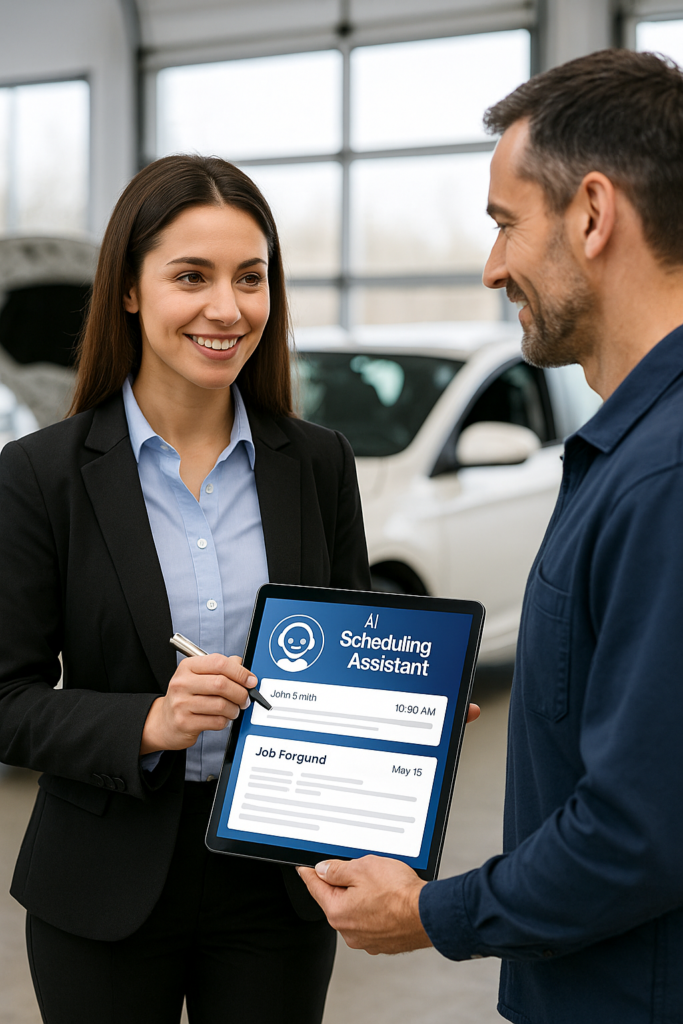
Oil Leak Calls Turn Into Repair Appointments
Oil leak problems usually cause drivers to call immediately.
A driver notices oil spots in the driveway. Another driver smells burning oil after a short trip. Meanwhile, technicians are already repairing vehicles and front desk staff are helping customers in the shop. Because of that workload, incoming calls often go unanswered.
When drivers cannot reach the shop quickly, they contact another repair business.
If you are researching an AI receptionist, you likely understand the opportunity. Oil leak inquiries often turn into repair appointments quickly. Therefore, answering every call directly affects shop revenue.
Instead of hiring additional front desk staff, many auto repair shops install systems that answer driver calls automatically. If you want to see how this works for repair businesses today, you can see how this captures oil leak repair inquiries and schedules more repair appointments.
Hiring Staff Does Not Guarantee Call Coverage
Hiring another receptionist may appear to fix the issue.
However, payroll increases immediately. In addition, onboarding requires training time. Eventually, employee turnover forces the hiring process to repeat again.
Vehicle problems also appear throughout the day. Some drivers call early before work. Others call in the evening after noticing smoke or oil smell. Because of that unpredictability, staffing alone rarely guarantees consistent phone coverage.
An AI receptionist solves the problem differently.
First, the system answers every call immediately. Next, it manages multiple driver conversations at the same time. In addition, coverage continues beyond normal shop hours. Meanwhile, no onboarding delays slow implementation. Likewise, retraining cycles never interrupt workflows. Most importantly, no sick days or turnover risk disrupt phone availability.
Because of that reliability, operational stability improves immediately.
A full time front desk employee often costs several thousand dollars each month once payroll taxes and benefits are included. In comparison, AI receptionist systems operate within flexible pricing ranges tied to call activity. As a result, capturing only a few additional oil leak repairs each week can offset the investment.
Fast Response Wins Repair Jobs
Drivers rarely call only one repair shop.
Most drivers contact several businesses until someone answers. Therefore, the shop that responds first usually wins the job.
With AI answering calls, drivers hear a professional voice immediately. Then the system gathers information about the vehicle and oil leak symptoms. After that, the conversation moves toward scheduling service.
Consequently, more repair inquiries convert into confirmed repair appointments.
If you want to see how repair shops convert those calls faster, you can see how this turns oil leak inquiries into scheduled repair visits.
ROI: Payroll Versus Captured Repair Revenue
Auto shop owners typically compare two choices.
One option involves hiring additional office staff. That approach increases payroll expenses and operational complexity.
The other option involves installing automated call intake infrastructure. That approach protects service opportunities without expanding overhead.
Even small improvements in answer rate can produce meaningful revenue gains. For example, capturing several additional oil leak repairs each week can quickly exceed the cost of the system.
Human sounding conversations reassure drivers immediately. At the same time, extended hours coverage captures evening repair calls. Meanwhile, no onboarding delays allow rapid implementation. Additionally, retraining cycles never interrupt operations. Finally, the system runs continuously without downtime from illness or employee turnover.
Because of these advantages, communication reliability improves significantly.
What Drivers Experience When Calls Are Answered
Drivers calling about oil leaks want quick help.
First, they want someone to answer the phone. Next, they want to explain the vehicle issue. Finally, they want confirmation that the shop can inspect the car.
Instead of reaching voicemail, drivers interact with a structured intake system. Consequently, trust builds quickly. As a result, more inquiries become scheduled repair visits.
Operational Stability For Busy Auto Repair Shops
Human sounding conversations maintain professional communication. In addition, extended hours coverage protects incoming repair demand. Furthermore, rapid deployment eliminates onboarding delays. Likewise, consistent workflows remove retraining cycles. Finally, continuous availability eliminates disruptions caused by sick days or employee turnover.
Because of that stability, auto repair shops maintain reliable communication systems.
If Oil Leak Calls Are Being Missed, This Is The Move
Auto repair shops focused on growth benefit from answering every service inquiry. When oil leak calls go unanswered, competing repair businesses capture those jobs.
Instead of expanding payroll exposure, many auto repair shops install AI receptionists because they protect revenue opportunities and stabilize communication. If you want to convert more oil leak inquiries into booked repair visits, you can see how this increases auto repair bookings automatically, review proof through see how service businesses build reliable communication systems designed for growth, or start building your AI receptionist workflow for your auto repair shop now.