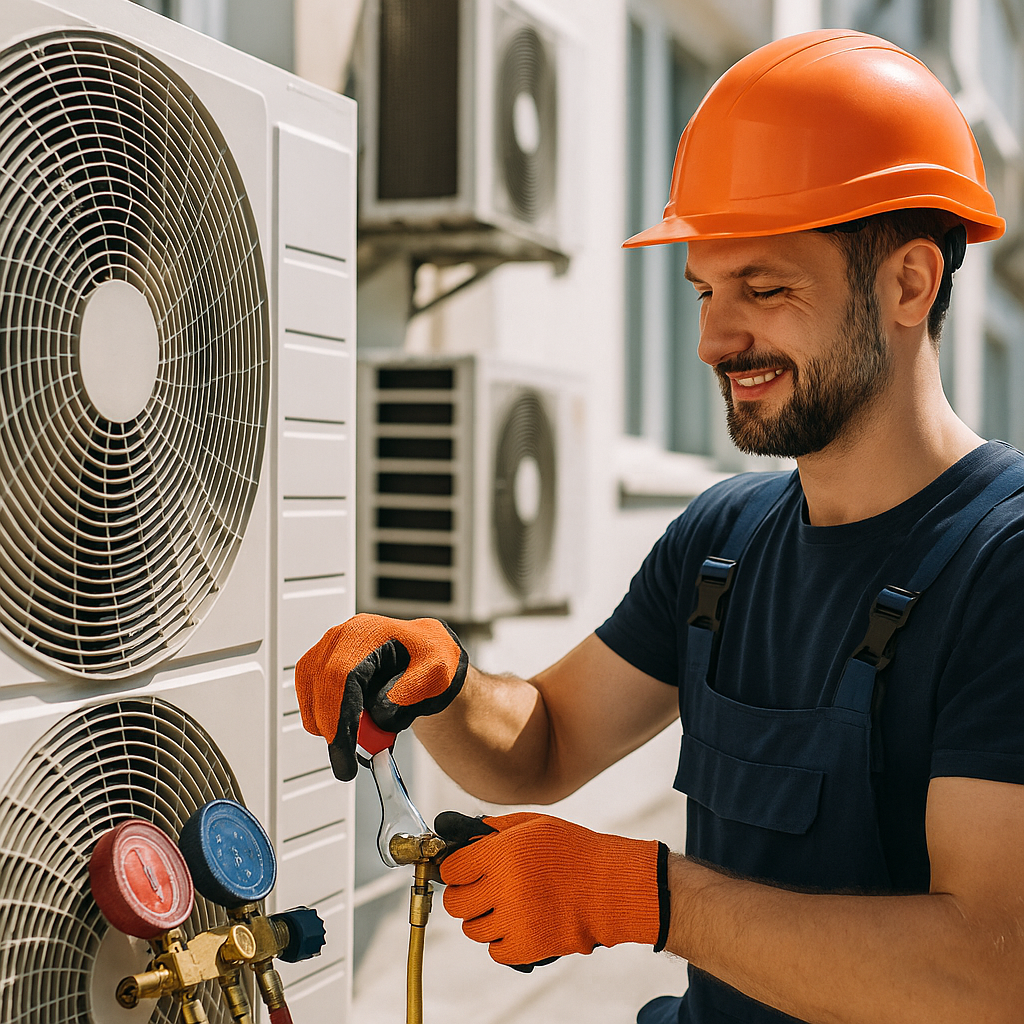
Same-Day Repair Calls Drive Daily Cash Flow
Right now, homeowners are calling because their system stopped working.
Some units fail completely. Others make loud noises or stop cooling. Meanwhile, your technicians are already dispatched and your office handles active tickets. Therefore, when urgent calls go unanswered, those same-day jobs disappear.
In HVAC, same-day repairs protect daily revenue.
If you are researching an AI receptionist, you already understand the pressure. Because missed urgent calls reduce booked repairs, repair volume directly impacts cash flow. Consequently, this decision centers on protecting high-margin service revenue.
Instead of hiring another office employee, many HVAC owners install infrastructure that answers every call instantly. If you want to evaluate how that fits into your operation today, you can see how this captures more same-day HVAC repair calls without increasing payroll overhead.
Why Hiring More Staff Does Not Guarantee Faster Intake
At first, adding staff feels like the solution.
However, payroll increases immediately. In addition, onboarding requires time. Then, turnover recreates intake gaps.
Repair demand fluctuates with weather. Heat spikes create surges. Cold fronts increase emergency calls. Because of that unpredictability, staffing rarely matches real-time demand.
By contrast, a human sounding AI receptionist answers every urgent call instantly. Not only does coverage extend beyond business hours, but overflow during peak times still gets handled. Furthermore, no onboarding delays slow deployment. Likewise, retraining cycles never interrupt workflow. Most importantly, no sick days or turnover risk disrupt intake performance. Therefore, operational stability improves immediately.
A full time receptionist can cost several thousand dollars per month once payroll taxes and benefits are included. In comparison, AI receptionist systems scale with usage. As a result, just a few additional same-day repairs per week can offset much of that investment.
Speed Wins The Emergency Job
Typically, homeowners call multiple HVAC companies when systems fail.
Therefore, the first company to respond usually secures the dispatch.
With AI handling intake, callers hear a professional voice immediately. Then, the system gathers equipment details and urgency level. After that, it confirms availability and schedules the repair. Consequently, your dispatch board fills instead of leaking revenue.
If you are weighing hiring versus automation, you can see how this stabilizes HVAC communication and increases same-day bookings
ROI: Fixed Payroll Versus Protected Daily Revenue
At the decision stage, HVAC owners compare two paths. On one hand, fixed payroll increases overhead every month. On the other hand, infrastructure protects revenue without long-term staffing commitment.
Small improvements in answer rate often raise booking rates. As booking rates rise, completed repairs increase. Then, higher repair volume strengthens predictable cash flow. Because pricing scales with call volume, most companies evaluate ROI rather than fixed packages.
Additionally, human sounding conversations build homeowner confidence immediately. At the same time, extended coverage captures nights and weekends. Meanwhile, no onboarding delays allow immediate implementation. Similarly, retraining cycles never create inconsistency. Finally, no downtime from sick days protects intake performance.
Hiring alone cannot guarantee that reliability.
What Homeowners Experience During An Urgent Breakdown
When air stops flowing or heat disappears, stress rises fast.
First, homeowners want acknowledgment. Next, they need a clear plan. Then, they want confirmation that help is coming today. As a result, the company that answers instantly builds trust.
Instead of hearing voicemail, callers experience structured intake. Consequently, confidence increases. Therefore, close rates improve.
Implementation Fits Inside Your Existing Systems
Importantly, automation does not require replacing your dispatch software.
Rather, the AI receptionist mirrors your intake process. Because calls route correctly, workflows remain familiar. In addition, structured questions align with your scheduling system. Consequently, integration feels seamless.
Most HVAC companies install automation after noticing missed urgent calls. As demand expands, the system scales automatically. Therefore, repeated hiring cycles become unnecessary.
Operational Stability Advantages During High Urgency
Human sounding conversations maintain professionalism. In addition, 24-hour availability protects inbound emergency demand. Furthermore, rapid deployment eliminates onboarding delays. Likewise, consistent workflows remove retraining cycles. Finally, continuous availability eliminates disruption from sick days or turnover.
Because of that stability, daily repair revenue becomes more predictable.
If Same-Day Repair Calls Are Slipping Through, This Is The Move
HVAC companies with steady inbound demand benefit most from AI receptionists. When urgent calls go unanswered, homeowners book competitors. Consequently, daily revenue declines.
Instead of increasing payroll exposure, many owners install AI because it protects intake and stabilizes communication. If you are ready to convert more urgent inquiries into same-day repairs, you can see how this books more HVAC repairs immediately, review proof through see how service businesses are building stable communication systems designed for growth, or start building your AI receptionist workflow for your HVAC company today