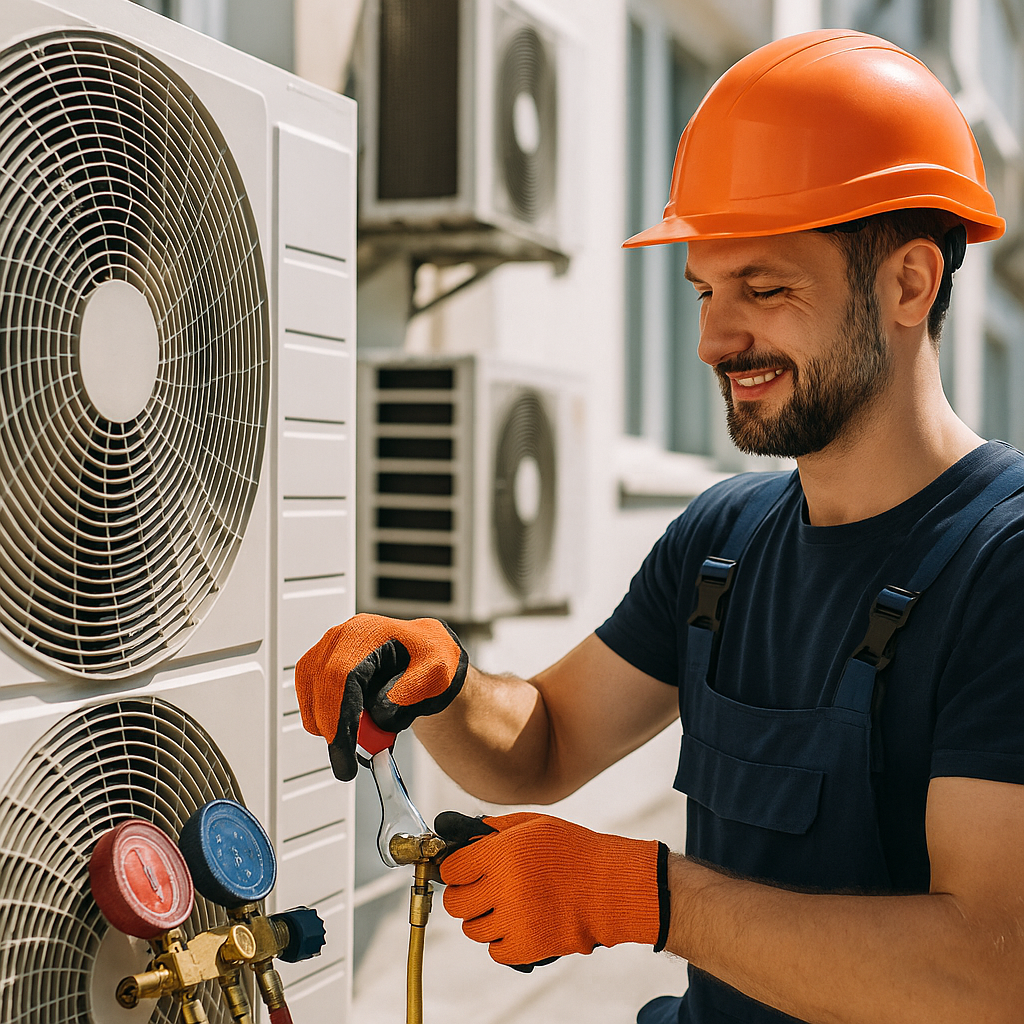
HVAC calls often happen at stressful moments
Some customers call when the air stops working.
Others call when the heat fails late at night.
Because comfort problems feel urgent, people expect a fast response.
As a result, the first company to answer clearly often wins the job.
If your team already feels busy during peak seasons, structured intake helps you stay organized while new service requests keep coming in.
🔗 See how this supports HVAC scheduling and growth
Missed calls turn into lost repair opportunities
One homeowner calls during lunch.
Another reaches out after work hours.
Because technicians cannot answer every call, many leads slip away.
As a result, potential revenue disappears quietly.
Dispatch teams handle many moving parts
Technicians travel between jobs.
Office staff manage schedules.
Because constant interruptions slow planning, intake systems help keep workflows smooth.
As a result, teams stay focused.
An AI receptionist answers immediately
The system greets callers politely.
Questions stay simple and easy to understand.
Because the process feels clear, customers explain issues faster.
As a result, bookings happen sooner.
Short prompts collect useful information
Is your system blowing warm air?
When did the issue begin?
Because structured questions guide the conversation, dispatchers receive clear notes.
As a result, technicians arrive prepared.
If your phone rings while technicians already stay fully booked, adding more manual work will only create stress.
Automation helps capture more service requests without slowing your team down.
🔗 See how HVAC businesses capture more repair calls
After-hours service requests still matter
Many customers search online at night.
Weekend breakdowns happen often.
Because the AI receptionist stays active all day, no emergency call waits until morning.
As a result, your company appears reliable.
Scheduling becomes faster and easier
Manual booking takes time.
Automation checks availability instantly.
Because calendars connect during the call, appointments lock in quickly.
As a result, dispatching feels smoother.
Organized notes improve technician efficiency
Some customers describe problems quickly.
Others need guidance.
Because intake records clear details, technicians know what to expect before arrival.
As a result, visits feel more productive.
Consistent communication builds trust
Different staff members may speak differently.
Automation keeps messaging steady.
Because every caller hears clear instructions, your business feels professional.
As a result, customer confidence increases.
If your team already works hard but calls still get missed, waiting longer will not fix the problem.
Smart intake helps turn more conversations into booked service calls.
🔗 See how AI receptionists help HVAC companies stay fully booked
Works alongside an AI executive assistant
The receptionist handles new service calls.
The executive assistant manages reminders and follow-ups.
Because both systems connect, customers receive updates without extra effort from your staff.
As a result, communication stays consistent.
Technicians focus on repairs instead of phones
Repair work requires attention.
Phone calls break concentration.
Because automation manages early conversations, technicians focus on solving problems.
As a result, service quality improves.
Seasonal demand becomes easier to manage
Summer heat increases calls.
Winter cold creates emergencies.
Because intake runs automatically, growth feels manageable during busy months.
As a result, teams avoid burnout.
Faster response times create competitive advantage
Customers compare several companies.
Speed influences decisions.
Because your receptionist answers quickly, callers feel supported immediately.
As a result, booking rates improve.
Data from calls improves future planning
Patterns appear across service requests.
Insights help guide marketing decisions.
Because conversations stay logged, owners understand which services bring the most demand.
As a result, strategy becomes clearer.
Simple conversations reduce customer confusion
Short sentences keep communication easy.
Clear prompts help customers stay calm.
Because calls feel structured, homeowners trust the process more.
As a result, conversions increase.
Organized workflows reduce office stress
Scheduling feels easier.
Notes stay clear.
Because automation handles intake quietly, office staff focus on higher-value tasks.
As a result, operations feel more balanced.
HVAC companies scale without hiring immediately
Growth brings more calls.
More calls bring pressure.
Because automation handles the first conversation, businesses expand without adding overhead right away.
As a result, margins stay strong.
Strong customer experiences lead to repeat business
People remember quick help.
They remember easy booking.
Because every call feels smooth, customers return for future maintenance.
As a result, long-term loyalty grows.
If emergency calls already arrive faster than your team can handle, manual intake will limit your growth.
AI receptionists help HVAC businesses respond faster while technicians stay focused on repairs.
🔗 Discover how automation supports HVAC service teams 🔗 Explore real performance outcomes from service industries 🔗 Start building your automation plan today