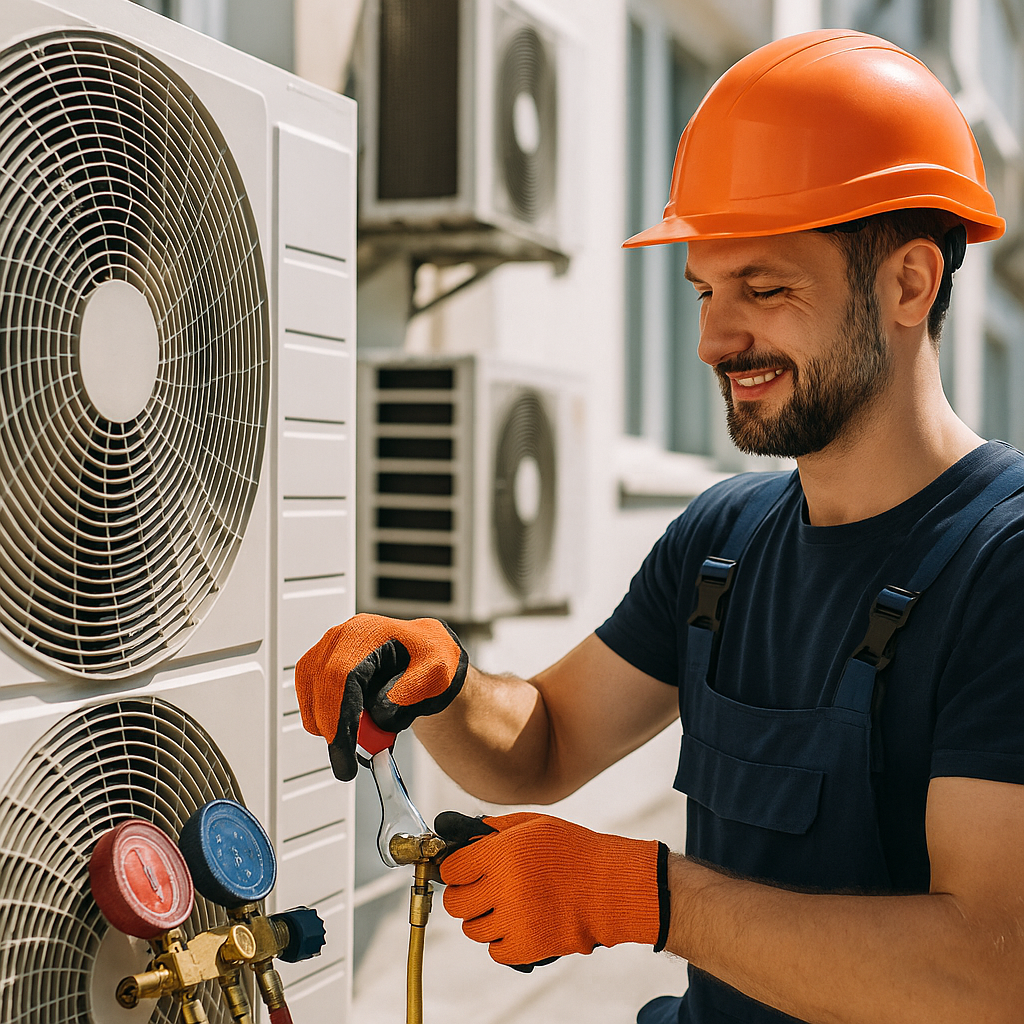
HVAC calls arrive when comfort is gone
HVAC calls rarely come in calm moments, because heat and cooling problems create stress quickly.
For that reason, customers expect fast answers when systems fail.
When comfort disappears, patience drops, and as a result people keep dialing until someone responds.
Missed calls lose HVAC jobs fast
In HVAC, silence feels risky to homeowners who want immediate relief.
Because of that reaction, unanswered calls push customers to choose the first company that answers clearly.
Once another provider responds, momentum shifts, and over time that pattern quietly reduces revenue.
Field work keeps teams off the phone
HVAC technicians spend their days on service calls, installs, and maintenance visits, which limits phone availability.
At the same time, inbound calls keep coming, and because attention stays in the field, many calls go unanswered.
As a result, strong opportunities slip away unnoticed.
What an AI receptionist changes immediately
An AI receptionist answers every inbound call the moment it comes in, removing voicemail from the process entirely.
Because the response is instant and calm, callers feel acknowledged instead of ignored.
Instead of waiting, the caller enters a guided conversation, and as a result trust begins forming right away.
Speed builds confidence during HVAC emergencies
Speed feels reassuring when comfort systems fail, especially during extreme weather.
For that reason, fast answers calm stressed homeowners and reduce frustration.
When someone hears a steady voice quickly, confidence rises, and because of that shift conversations move forward.
Clear questions keep jobs organized
HVAC calls often start with vague details, which can lead to wasted time later.
To avoid that outcome, the AI asks simple and direct questions that clarify the issue early.
Rather than guessing the problem, technicians arrive prepared, and as a result efficiency improves.
Calls get routed with purpose
Not every HVAC call needs the same response, because repairs, maintenance, and installs all follow different paths.
Because of that, intent gets identified before routing happens.
Urgent repairs move fast, routine service gets scheduled properly, and general questions get resolved quickly, which keeps teams focused.
Scheduling improves without back-and-forth
Manual callbacks slow momentum and frustrate customers who want quick answers.
For that reason, delays often cause jobs to go elsewhere.
Since the AI guides scheduling smoothly, appointments lock in faster, and as a result calendars stay full.
After-hours calls stop disappearing
HVAC problems do not follow office hours, because systems fail at night and on weekends too.
Since the AI works 24/7, coverage never breaks, and as a result demand stays captured when competitors are offline.
Call details stay organized automatically
Busy days blur memory, especially when technicians juggle multiple service calls.
Because humans forget details under pressure, notes often get missed.
Since the AI logs every call automatically, records stay accurate, and as a result follow-ups become reliable.
Follow-ups happen without chasing
Many HVAC jobs stall after the first call when schedules fill up and responses slow down.
Because reminders trigger automatically, momentum continues without manual effort.
As a result, close rates improve and fewer leads fall through the cracks.
Consistent tone builds credibility
Tone matters when customers feel uncomfortable or stressed.
For that reason, calm and clear language builds trust quickly.
Because scripts stay consistent across every call, professionalism rises, and as a result the business feels dependable.
Your HVAC brand looks more established
Perception shapes buying decisions, especially in home services.
Because fast answers feel polished, credibility increases.
When routing feels smooth and organized, operations look solid, and as a result the company appears larger.
Works with tools you already use
Change creates resistance in busy HVAC companies that rely on familiar systems.
For that reason, the AI connects to existing software instead of replacing it.
Because adoption feels easy, disruption stays low and value shows up quickly.
Growth no longer overwhelms staff
Growth brings more calls, more leads, and more admin work behind the scenes.
Because volume increases, pressure usually follows.
Since the AI scales instantly, pressure stays controlled, and as a result teams stay focused on service quality.
Where the executive assistant fits later
As HVAC volume grows, internal work expands alongside field operations.
Because emails, invoices, and follow-ups increase, admin load rises.
That is when the AI executive assistant enters Phase 2, and as a result operations stay organized.
Reception first, operations second
Order matters in HVAC businesses, because calls create revenue before admin work begins.
After inbound calls get handled correctly, internal workflows get automated, and as a result growth stays stable.
Why HVAC companies adopt AI reception early
The reason remains simple, because missed calls lose jobs.
Since faster companies answer first, they win trust, and over time that advantage compounds.
If your HVAC company misses calls or struggles to schedule quickly during peak demand, it may be time to strengthen the front line.
Built for real HVAC conversations
This system is not generic, because workflows mirror real HVAC service needs and customer expectations.
As a result, conversations feel natural and teams see value quickly.
Long-term value for HVAC owners
This approach does not replace people, but instead protects revenue and reduces chaos behind the scenes.
When calls are handled correctly, stress drops and growth feels manageable.
If you want an HVAC business that never misses a call and keeps schedules full without chaos, now is the time.
🔗 View Services 🔗 See Results 🔗 Contact Us